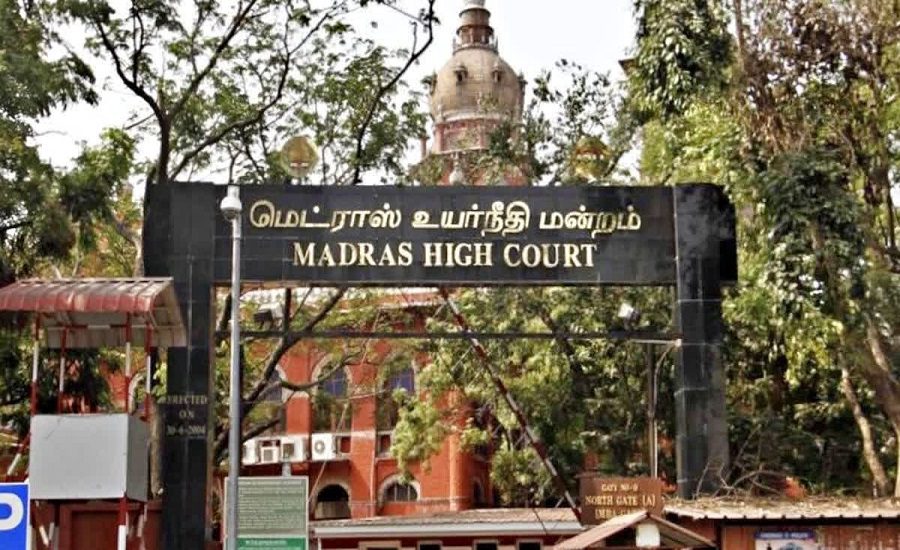
Chennai: The Madras High Court on Wednesday rejected a Public Interest Litigation (PIL) contesting the promotion of seven senior Tamil Nadu cadre IAS officers to the coveted Chief Secretary grade, holding that service-related disputes cannot be examined through PIL proceedings.
The petition had challenged the Tamil Nadu Government’s decision to elevate seven IAS officers, including 1995-batch officer T. Udhayachandran, to the Chief Secretary grade without securing prior approval from the Union Government.
High Court Refuses to Consider Service Matter Through PIL
A Division Bench comprising Chief Justice Sushrut Arvind Dharmadhikari and Justice G. Arul Murugan dismissed the petition at the admission stage, noting that Public Interest Litigations concerning service matters are not maintainable in law.
The court’s ruling effectively provides immediate relief to the seven IAS officers whose promotions had been questioned before the High Court.
Petition Questioned December 2025 Government Order
The matter stemmed from a Government Order (GO) issued by the Tamil Nadu Government in December 2025 promoting seven senior IAS officers to the Chief Secretary grade with effect from January 1, 2026.
The officers covered under the promotion order are:
M.A. Siddique (IAS:1995)
R. Jaya (IAS:1995)
P. Senthilkumar (IAS:1995)
Sandhya Venugopal Sharma (IAS:1995)
T. Udhayachandran (IAS:1995)
Hitesh Kumar S. Makwana (IAS:1995)
B. Chandra Mohan (IAS:1995)
The promotions raised the officers to the Chief Secretary grade, one of the highest ranks in the Indian Administrative Service hierarchy.
Petitioner Claimed Breach of Service Rules
The PIL was filed by advocate M. Balakrishnan, who contended that the State Government lacked the authority to issue the promotion order without first obtaining approval from the Central Government.
According to the petitioner, the Tamil Nadu Government had forwarded a proposal to the Centre on November 10, 2025 seeking approval for notifying the promotions.
However, he asserted that the competent authority at the Union Government level rejected the proposal through a communication dated November 21, 2025.
The rejection, according to the petition, was based on alleged statutory irregularities, including:
Excessive operation of ex-cadre posts beyond permissible limits.
Lack of mandatory prior approval.
Failure to comply with applicable service regulations governing cadre management.
The petitioner argued that despite the rejection, the State Government moved ahead with the promotion process.
Plea Sought Status Quo on Monetary Benefits
Apart from challenging the legality of the promotion order, the petitioner also sought directions to the Accountant General of Tamil Nadu to maintain status quo regarding financial benefits arising from the promotions.
The plea requested that pay revisions, allowances, perquisites, arrears, pensionary benefits and other monetary entitlements connected to the promotions should not be granted or implemented until approval from the Union Government was secured.
Court Holds PIL Not Maintainable
While the petitioner argued that the promotions were arbitrary and without authority, the High Court did not examine the merits of the allegations.
Instead, the Bench concentrated on the maintainability of the petition itself and reiterated the settled legal principle that service-related disputes cannot ordinarily be pursued through Public Interest Litigations.
Observing that PIL jurisdiction is not intended for adjudicating service matters, the court declined to entertain the petition and dismissed it.
Relief for Senior Bureaucrats
The dismissal of the PIL effectively paves the way for the continued implementation of the promotion order issued by the Tamil Nadu Government.
The decision is particularly important for the seven senior IAS officers who were elevated to the Chief Secretary grade from January 1, 2026, and who would otherwise have faced uncertainty regarding the legitimacy of their promotions.
The ruling also reaffirms the judicial principle that disputes concerning appointments, promotions and service conditions are generally required to be pursued through appropriate service law remedies rather than through PIL proceedings.