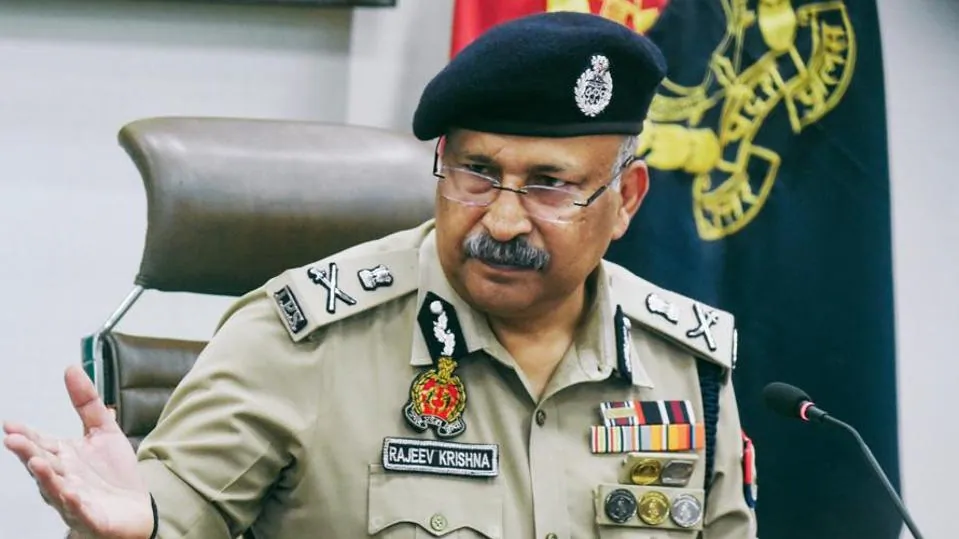
UP DGP Rajeev Krishna Calls on IPS Probationers to Prioritise Professional Excellence, Cyber Policing and Public Grievance Resolution
Lucknow: Uttar Pradesh Director General of Police (DGP) Rajeev Krishna, a 1991 batch IPS officer, met with 23 IPS probationers of the 2023-24 batch on Wednesday, encouraging the young officers to uphold professional excellence, build effective public grievance resolution systems, and develop advanced cyber policing expertise to address evolving law enforcement challenges.
The interaction was held at the Uttar Pradesh Police Headquarters in Lucknow, where the IPS probationers, presently undergoing field training, shared their observations and feedback from the ongoing 29-week district practical training programme.
DGP Outlines Core Priorities for Future Police Leadership
Speaking to the trainee officers, DGP Rajeev Krishna stressed that present-day policing demands a blend of ethical behaviour, professional capability, legal understanding, and technological adaptability.
As the state’s senior-most police officer, Krishna highlighted the priorities of the Uttar Pradesh Police and underscored that public confidence remains the cornerstone of effective policing. He stated that officers must consistently pursue professional excellence while ensuring citizens receive prompt and effective responses to their concerns.
According to the DGP, a responsive public grievance resolution mechanism not only enhances service delivery but also reinforces public trust in the police organisation.
Focus on Cyber Policing in an Evolving Environment
Acknowledging the growing threat of cybercrime, Rajeev Krishna underscored the need to cultivate strong cyber policing capabilities among young officers.
He advised the probationers to regularly upgrade their technological knowledge and remain informed about emerging trends in cybercrime, digital scams, and online criminal activity. As technology increasingly shapes criminal conduct, officers must be prepared to investigate and respond efficiently to cyber-related offences, he noted.
The DGP emphasised that cyber policing has emerged as one of the most vital aspects of modern law enforcement and will continue to assume a greater role in safeguarding public security.
Practical Training Crucial for Effective Policing
During the interaction, the IPS probationers shared perspectives from their field training, which exposed them to multiple dimensions of policing and administration.
The officers highlighted their experiences in:
Crime prevention and control
Maintenance of public order
Cybercrime investigations
Application of forensic tools and scientific investigative methods
Traffic regulation and management
VVIP security arrangements
Execution of newly enacted criminal laws
The DGP observed that practical field exposure is essential in preparing officers for the realities of police service and helps bridge the divide between academic learning and operational demands.
Ethics, Competence and Legal Expertise Must Go Together
Rajeev Krishna reminded the young officers that ethical conduct should remain central to every policing decision.
He said that while integrity and honesty are indispensable qualities for police personnel, professional competence and legal expertise are equally critical for effective law enforcement.
The DGP encouraged probationers to continually strengthen their understanding of criminal laws, investigative procedures, and operational approaches to enhance their effectiveness in the field.
He further noted that policing today requires a combination of sound judgment, sensitivity, technical proficiency, and leadership ability.
Preparing for New Laws and Election Responsibilities
The DGP also advised the probationers to ready themselves for emerging administrative and operational responsibilities, particularly the implementation of new criminal laws and election-related assignments.
With policing duties becoming increasingly complex, officers must be capable of adapting swiftly to legal and procedural changes while maintaining the highest standards of professionalism, he said.
The interaction offered the young IPS officers an opportunity to better understand the expectations of the state police leadership and gain insights into the changing nature of policing in Uttar Pradesh.
Building the Next Generation of Police Leadership
The meeting reflected Uttar Pradesh Police’s commitment to developing a new generation of officers capable of addressing both traditional and emerging security challenges.
By emphasising professional excellence, citizen-focused policing, technological proficiency, and ethical conduct, the state police leadership aims to prepare young IPS officers for leadership responsibilities in an increasingly dynamic law enforcement landscape.
The DGP’s interaction reinforced the message that effective policing is not solely about maintaining law and order but also about fostering public trust, ensuring justice, and responding proactively to the evolving nature of crime and governance.