CSSNEWS
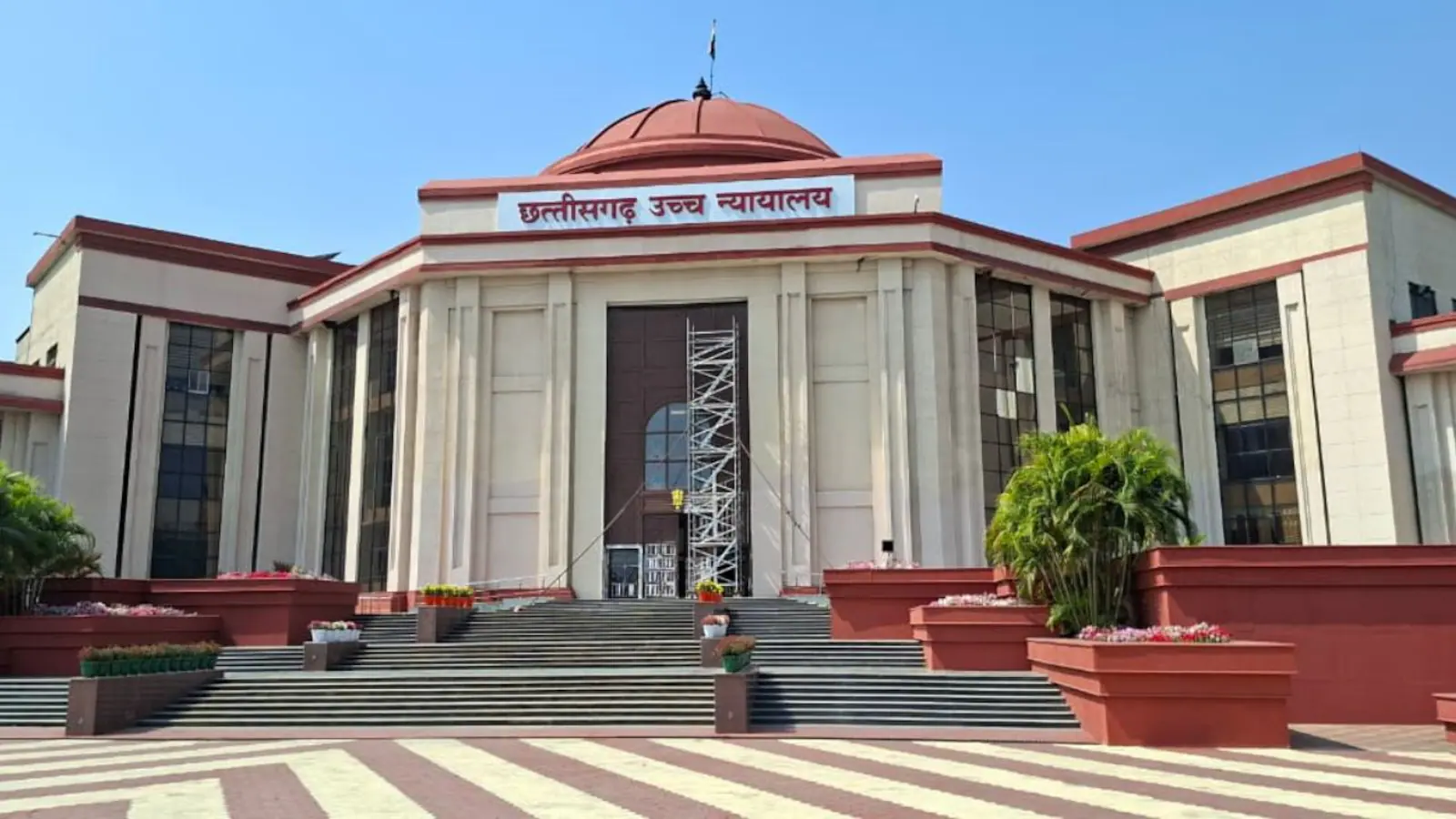
The Chhattisgarh High Court has denied bail to retired IAS officer Jeevan Kishor Dhruv in the CGPSC recruitment case, observing that leaking competitive exam papers can be “more heinous than murder” because of its impact on lakhs of aspirants.
Raipur: The Chhattisgarh High Court has rejected the regular bail plea of retired IAS officer Jeevan Kishor Dhruv, who was arrested by the Central Bureau of Investigation (CBI) in connection with alleged irregularities in the Chhattisgarh Public Service Commission (CGPSC) recruitment case.
While refusing bail, Justice Bibhu Datta Guru made strong remarks on the consequences of question-paper leaks in competitive examinations, stating that such an act can be “more heinous than murder” as it can ruin the careers and future opportunities of lakhs of aspirants who spend years preparing for government examinations.
The court held that the allegations against Dhruv could not be viewed as an ordinary offence considering their alleged effect on the integrity of the public recruitment system.
Ex-IAS Officer Was CGPSC Secretary
Jeevan Kishor Dhruv, 62, is a retired 2012-batch IAS officer of the Chhattisgarh cadre. He was serving as Secretary of the CGPSC during the period when the alleged irregularities in the 2020–2022 recruitment process occurred.
The CBI arrested Dhruv in September 2025 in connection with the case.
His son, Sumit Dhruv, who was selected as a Deputy Collector through the recruitment examination under investigation, is also an accused in the case.
Dhruv had challenged his continued detention through a regular bail application, claiming that he had been falsely implicated and that there was inadequate evidence connecting him to the alleged paper leak.
HC Says Paper Leak Can Affect Lakhs of Aspirants
The High Court adopted a particularly stern view of the alleged leakage of competitive examination papers.
The court observed that a person who facilitates the leakage of a question paper effectively jeopardises the careers and futures of a large number of young aspirants who work extensively to prepare for competitive examinations.
Justice Bibhu Datta Guru observed that while murder directly impacts a person and their family, compromising a competitive examination can adversely affect an entire community of aspirants and society as a whole.
The court therefore held that the allegations in the present case had to be assessed in view of their wider consequences.
Court Finds Prima Facie Material Against Dhruv
While considering the bail plea, the High Court noted that the prosecution had, at the prima facie stage, gathered material indicating that Dhruv allegedly misused his official position as CGPSC Secretary.
According to the prosecution case, Dhruv allegedly retained confidential question papers relating to the 2021 CGPSC Main Examination and handed them to his son.
The court also took note of material suggesting that Sumit Dhruv had prepared four specific topics that later appeared in the examination.
The prosecution relied on recoveries made from Dhruv’s residence, witness statements and documentary material to establish his alleged involvement in the conspiracy.
Alleged Recovery of Examination Material
The CBI has claimed that searches conducted during the investigation led to the recovery of material connected with the examination.
According to the prosecution, copies of questions and answers relating to General Studies Paper VII, along with the Question-cum-Answer Booklet for the Essay paper, were recovered from Dhruv’s residence.
The investigation agency has relied on these recoveries, along with other material, to allege that confidential examination information was made available to Dhruv’s son.
The allegations remain subject to the ongoing criminal proceedings, with the court assessing the material at the bail stage.
‘Specific Role’ Attributed to Former IAS Officer
The High Court said that the specific role attributed to Dhruv, the seriousness of the allegations and their possible impact on the integrity of public recruitment weighed against granting him bail.
The court noted that Dhruv was not merely an ordinary accused but had allegedly held a position of responsibility within the CGPSC and was entrusted with preserving the confidentiality and integrity of the examination process.
The court therefore was not convinced to exercise its discretion in his favour.
Defence Says Dhruv Was Falsely Implicated
During the hearing, Dhruv’s counsel, advocate Devershi Thakur, argued that his client had been falsely implicated mainly because he was the Secretary of the CGPSC.
The defence pointed out that Dhruv was not named in the original FIR.
It was also argued that investigators had not recovered incriminating documents or electronic devices from Dhruv, except a mobile phone, and that there was no direct evidence establishing that he had leaked question papers or passed them on to his children.
Defence Claims Dhruv Had Disclosed Sons’ Candidature
The defence further argued that Dhruv had informed the competent authorities after discovering that both his sons were candidates in the examination.
According to his counsel, Dhruv had requested to be relieved of confidential responsibilities associated with the recruitment process.
The defence submitted that official records showed that he was subsequently given no confidential examination-related duties.
His lawyers also argued that allegations of preferential treatment were inconsistent with the examination results, noting that one of Dhruv’s sons failed to qualify while the other secured a rank substantially below the top positions.
CBI Opposes Bail, Cites Recruitment Process Integrity
The CBI strongly opposed Dhruv’s bail application.
CBI counsel Vaibhav A. Goverdhan argued that the case involved large-scale irregularities that struck at the integrity of the public recruitment system and weakened the confidence of thousands of candidates who appeared for the examination.
According to the agency, Dhruv, along with the then CGPSC chairman, controller of examinations and other accused persons, allegedly entered into a criminal conspiracy to leak confidential question papers from the 2021 Main Examination.
The alleged objective was to provide Dhruv’s son with an unlawful advantage in the recruitment process.
CBI Alleges Question Papers Were Supplied to Son
The investigation agency’s case is that Dhruv allegedly exploited his position as CGPSC Secretary to access confidential examination material and subsequently supplied it to his son.
The CBI has also alleged that examination-related material recovered during searches supported aspects of its investigation.
The alleged recovery included material relating to General Studies and the essay examination, which the agency has cited as evidence backing its allegations.
The court, while considering the bail application, found that the prosecution had presented sufficient prima facie material to justify continued judicial custody at this stage.
Defence’s Parity Argument Also Rejected
The defence had also sought bail on the ground of parity with another accused who had been granted bail by the Supreme Court.
The CBI opposed the argument, pointing out that the accused who had secured bail was a private individual.
According to the prosecution, Dhruv occupied a fundamentally different position because he was a senior public servant entrusted with safeguarding the confidentiality and integrity of the examination process.
The distinction was relevant to the court while evaluating Dhruv’s individual role and the seriousness of the allegations against him.
Who Is Jeevan Kishor Dhruv?
Jeevan Kishor Dhruv, also known as J.K. Dhruv, is a retired 2012-batch IAS officer of the Chhattisgarh cadre.
He began his administrative career in the State Civil Service before being inducted into the IAS in 2012.
During his career, he held several administrative posts, including serving as Managing Director of the Chhattisgarh Matikala Board and Secretary of the Chhattisgarh Public Service Commission.
He holds a Master of Arts degree in Political Science.
His tenure as CGPSC Secretary has now come under scrutiny as part of the CBI probe into alleged irregularities in the state recruitment process.
Arrest in September 2025
Dhruv was arrested by the CBI in September 2025 as the investigation into the alleged CGPSC recruitment scam widened.
The agency arrested him along with other accused persons, including officials associated with the examination process and his son.
The investigation has focused on alleged manipulation of the recruitment process and the alleged leakage of confidential examination material.
CGPSC Case Under Investigation
The broader case concerns alleged irregularities in recruitment examinations conducted by the CGPSC during the 2020–2022 period.
The CBI investigation has examined the alleged role of senior officials, candidates and other individuals in compromising the recruitment process.
Dhruv’s alleged role has attracted particular attention because of his position as CGPSC Secretary during the period under investigation.
The allegations against him, however, will ultimately have to be established through the judicial process.
Court’s Strong Message on Examination Integrity
The High Court’s observations underline the importance it places on maintaining the confidentiality and credibility of competitive examinations.
For lakhs of candidates, recruitment examinations represent years of preparation and an opportunity to secure government employment. Any manipulation of question papers or examination material can therefore have consequences extending far beyond individual candidates.
In rejecting Dhruv’s bail, the court stressed the broader social consequences of compromising such examinations and the responsibility of officials entrusted with safeguarding their integrity.
Bail Rejected, Legal Proceedings Continue
With the Chhattisgarh High Court rejecting his regular bail plea, Jeevan Kishor Dhruv remains in custody as the CBI investigation and related legal proceedings continue.
The court’s order does not amount to a final determination of guilt. The allegations against Dhruv and the other accused will be examined during the subsequent stages of the criminal proceedings.
The case remains significant for its implications for the integrity of public recruitment examinations, particularly because the alleged misconduct involves officials entrusted with protecting the confidentiality of the selection process.